Short answer
How do I choose the right printed food packaging for my business?
The right printed food packaging starts with function: match the format to the food, heat, moisture, portion and delivery time before choosing print colours or finishes. Test the container and lid with a complete menu item, then focus your branding budget on the boxes, cups, bowls or bags customers see and carry most. DORU can help you compare products, arrange samples and quote for bespoke packaging in the UK.
Start with the food, not the artwork
Packaging has to protect the food before it promotes the brand. Note whether each menu item is hot or cold, dry or saucy, crisp or steamed, and eaten immediately or delivered. That short brief quickly narrows the suitable materials and formats.
Hot curries and pasta need secure, leak-resistant bowls or containers. Burgers and fried food benefit from boxes that release steam. Soups need a reliable rim-and-lid fit. Sushi needs a shallow tray that keeps presentation intact, while coffee and cold drinks require the correct cup-and-lid combination.
Choose the format for the journey
Counter service and twenty-minute delivery create different demands. For delivery, prioritise a rigid base, a lid that stays seated, flat stacking and enough ventilation to manage condensation. Test a fully packed order in the same bags your drivers or delivery partners use.
If oil or sauce can reach the board, choose a grease-resistant or lined format designed for that use. Keep wet sauces away from crisp food, avoid overfilling, and leave the lid seal clean. A well-matched container reduces leaks, refunds and the amount of secondary wrapping needed.
- Bowls and round containers suit curries, salads, rice dishes and mixed meals.
- Clamshells and takeaway boxes suit burgers, fried food and bakery items.
- Shallow trays protect sushi, sharing platters and neatly arranged food.
- Greaseproof sheets and pouches add a branded touch to wraps, pastries and baskets.
Get size and lid fit right
Use the portion you actually serve, not an estimated volume. Fill the proposed pack, close it while the food is at service temperature, stack it and leave it for the expected journey time. Check for movement, lid lift, softening, grease marks and trapped steam.
Oversized packaging costs more and makes portions look smaller. Undersized packaging can prevent a clean seal and damage presentation. Once you choose a size, confirm the exact matching lid rather than assuming products with the same stated diameter are interchangeable.
Select a material you can explain clearly
Kraft paperboard gives a natural appearance and a strong surface for simple printed branding. Bagasse is moulded fibre that works well for many hot meals and is often chosen where heat tolerance matters. Plastic and foil can still be the correct functional choice for particular foods, but their disposal message must be accurate.
Ask for food-contact documentation and any evidence supporting environmental, PFAS-free or BPA-free claims for the exact product. Do not rely on a generic logo or assume one certificate covers an entire range. The best claim is specific, documented and consistent with the collection available where the pack is used.
Make the print work harder
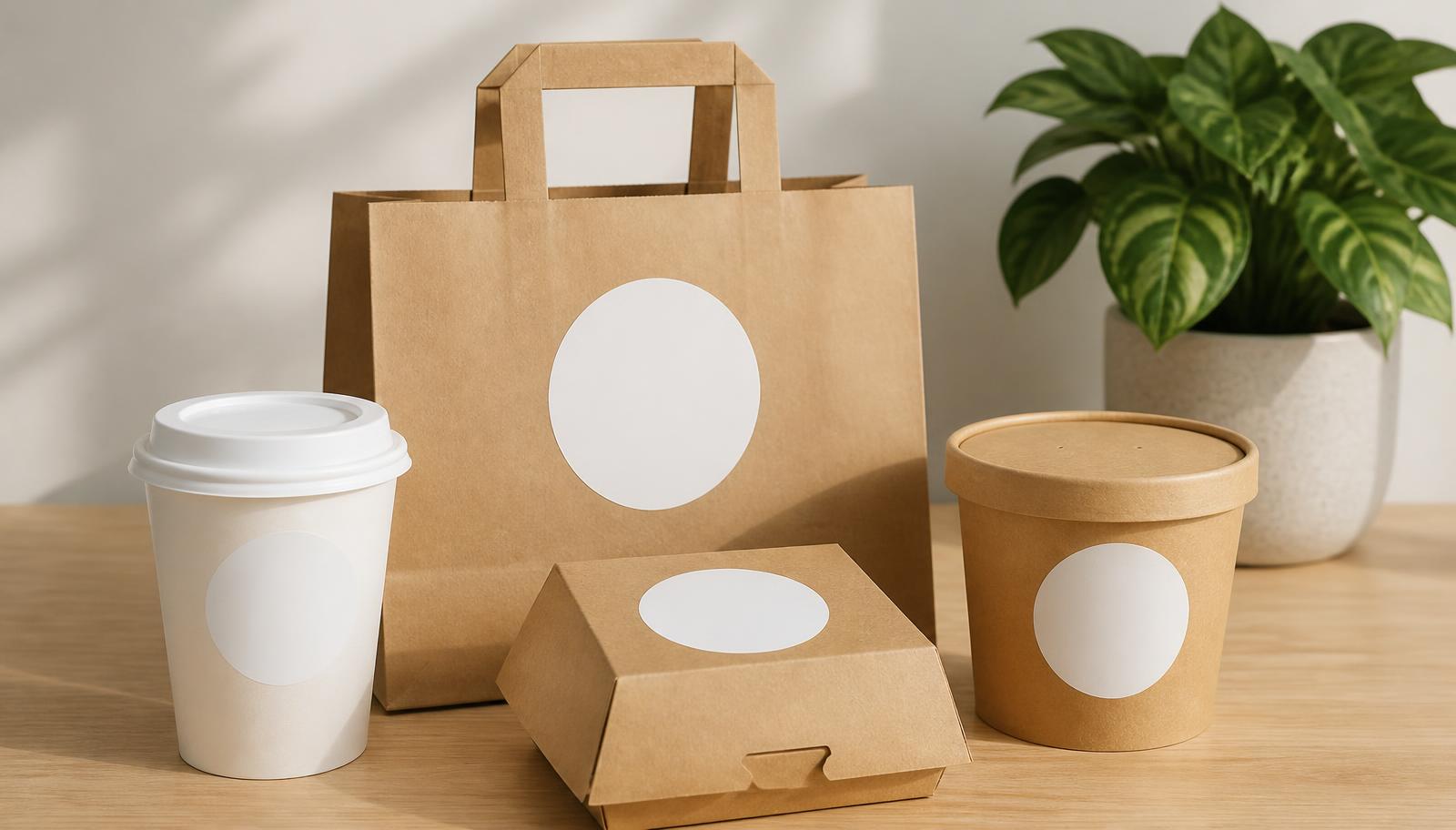
Put the clearest branding on the item customers hold longest and carry furthest. A confident one- or two-colour design on kraft can be more distinctive and economical than covering every surface. Keep the logo readable, preserve contrast and leave practical areas clear for ingredient, order or allergen labels.
For a coordinated range, repeat a small set of brand elements across boxes, bowls, cups and bags rather than forcing the same artwork onto every shape. Ask for a proof and check it at actual size before production, especially when exact colour appearance matters on natural materials.
Plan quantity, storage and replenishment
Custom print becomes more economical as volume increases, but the cheapest unit price is not a saving if cartons occupy valuable space or become obsolete after a menu change. Base quantities on real weekly usage, available dry storage and the likely life of the artwork.
If you need volume pricing without taking everything at once, ask about call-off stock. DORU can hold agreed stock and release deliveries in practical quantities, helping multi-site and growing food businesses protect cash flow and maintain consistent packaging.
Request a useful printed packaging quote
For an accurate quote, share the foods you serve, preferred products and sizes, expected quantity per item, number of print colours, delivery locations and target date. Upload vector artwork if available; if not, DORU can help prepare the design.
Use the quote form to search DORU's current product range, select several items in one enquiry and tell the print team what your service needs to achieve. The team replies within one working day.
Key takeaways
- Match the packaging to food, temperature, moisture and journey before choosing artwork.
- Test the real portion with its exact lid under realistic delivery conditions.
- Concentrate print spend on the boxes, bowls, cups and bags customers see most.
- Request documentation for food-contact and environmental claims on the exact product.
- Send products, quantities, artwork and timing for a useful bespoke quote.
Author

Lan Olitoquit
Creative and Marketing Professional
Lan is a creative and marketing professional with over seven years of experience. He transforms brand messaging into compelling digital experiences, using data to craft high-converting campaigns. He is currently pursuing an MBA at San Beda College Alabang, bridging what business knows with what business does.
View all posts