Short answer
Why should takeaway businesses choose PFAS-free food packaging after PPWR?
Takeaway businesses should choose PFAS-free food packaging because PPWR now restricts PFAS in food-contact packaging placed on the EU market. Grease-resistant paper, fibre clamshells, kraft takeaway boxes, wrappers, bakery papers and pizza boxes are the products to check first. The safest buying route is to ask for item-specific confirmation and a current test report or declaration, not just a PFAS-free logo.
What PFAS did in food packaging
PFAS are a family of substances historically used to repel oil, water and grease. In food service, that made them attractive for wrappers, greaseproof paper, takeaway cartons, bakery papers and moulded fibre packs. The issue is that PPWR now sets strict limits for food-contact packaging, so buyers need evidence that the product they purchase sits below those limits.
This does not mean every kraft box, paper bowl or bagasse clamshell contains PFAS. It means grease-resistant food packaging should be checked properly, especially when switching supplier or buying from a marketplace without clear documentation.
Products to check first
Prioritise the items where grease and moisture resistance are part of the job.
- Greaseproof paper, burger wraps, bakery papers and printed food liners.
- Kraft takeaway boxes, noodle boxes, paper bowls and paper soup containers.
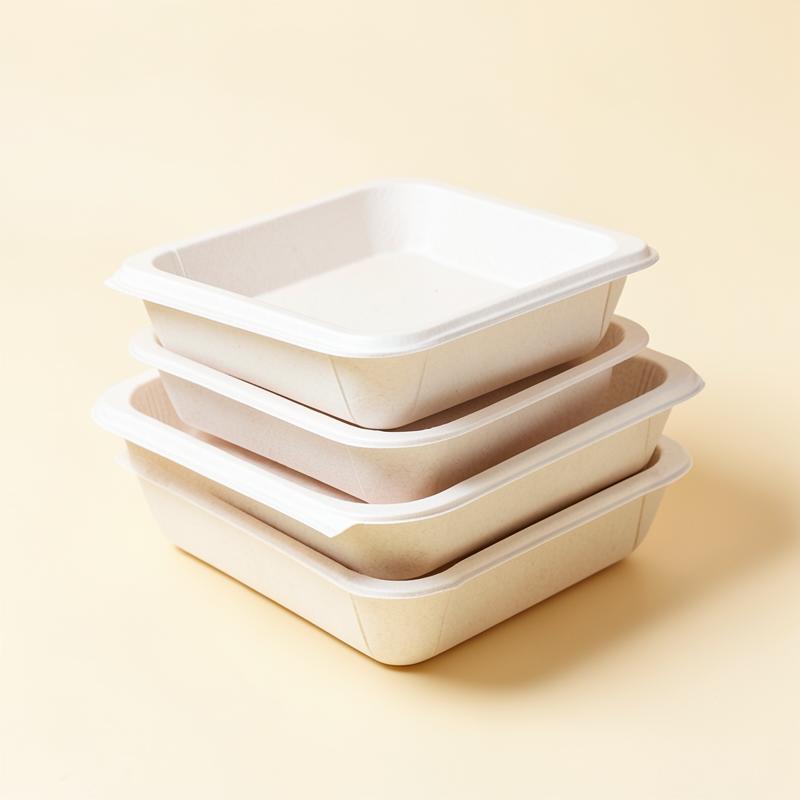
- Bagasse clamshells, bagasse plates, trays and moulded fibre containers.
- Pizza boxes and fast-food trays where hot, oily food sits directly on the board.
- Custom printed packaging where inks, coatings or laminates may change the compliance picture.
What a good PFAS-free claim should include
A credible PFAS-free food packaging claim should be linked to the actual item being supplied. Look for a product description, test date, test method, named sample, conclusion and the regulation or limit being assessed. If you are ordering multiple formats, one certificate for one item should not be stretched across the whole range unless it clearly covers those items.
DORU’s uploaded SGS report is a useful example of certificate-backed evidence. It identifies sugarcane bagasse tablewares submitted by Basebetter (UK) Limited and records pass conclusions for PPWR PFAS content, total fluorine and heavy metals on the tested sample. That is stronger than a loose marketing statement, but it still needs to be matched to the product you buy.
PFAS free and BPA free are not the same claim
PFAS and BPA are different chemical concerns. PFAS is the immediate PPWR food-contact packaging issue for grease-resistant items. BPA is more commonly discussed around some plastics, coatings and reusable food-contact materials. A supplier can be PFAS free on one product and BPA free on another, but the evidence should match the material and product type.
When customers ask DORU for PFAS-free and BPA-free food packaging, the practical answer is to select suitable products first, then request the relevant confirmation or certificate for those items. That keeps the claim precise, useful and defensible.
Buying PFAS-free takeaway packaging in London
For cafés, restaurants, dark kitchens, food trucks and caterers in London, compliance is only one part of the buying decision. You also need reliable stock, suitable sizes, leak resistance, food presentation and delivery timing. DORU combines food packaging supply with London delivery support, so you can move from compliance question to practical order without separating advice from supply.
Evidence and sources
View SGS PPWR PFAS test report for DORU sugarcane bagasse tablewaresKey takeaways
- PFAS-free food packaging is now a high-priority buying term after PPWR.
- Grease-resistant food-contact items should be checked first.
- A certificate should match the product, sample and claim being made.
- PFAS-free and BPA-free claims should be handled separately and precisely.
Author

Lan Olitoquit
Creative and Marketing Professional
Lan is a creative and marketing professional with over seven years of experience. He transforms brand messaging into compelling digital experiences, using data to craft high-converting campaigns. He is currently pursuing an MBA at San Beda College Alabang, bridging what business knows with what business does.
View all posts