Short answer
What is bagasse packaging and is it compostable?
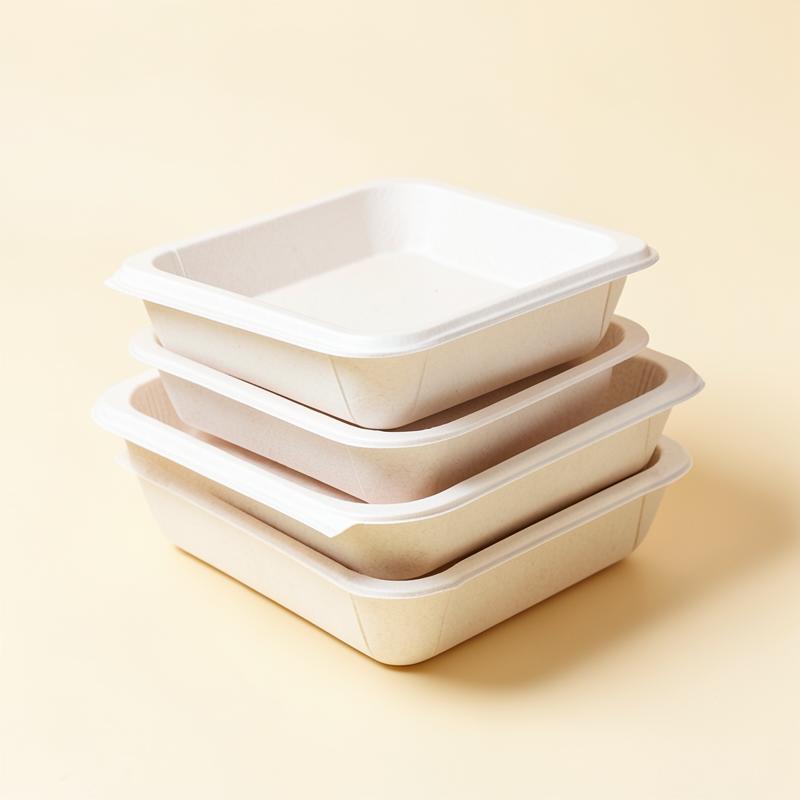
Bagasse is the fibrous pulp left over after sugarcane is crushed for its juice. Pressed under heat into bowls, trays and plates, it is sturdy, grease-resistant, safe from freezer to microwave, and certified compostable in industrial composting. It is made from an agricultural by-product rather than a purpose-grown crop, which is why it is one of the most widely used plastic replacements in food service.
Where bagasse comes from
Sugar mills crush cane to extract juice, leaving huge volumes of dry fibre behind. That fibre is bagasse. Historically it was burned as mill fuel; today a large share is washed, pulped and moulded into food-service items.
Because it is a residue from an existing crop, no additional land is farmed to produce it — a meaningful difference from materials that need a dedicated crop.
How it performs on a real service line
Bagasse is popular because it behaves well under kitchen conditions, not just on a sustainability slide.
- Handles hot food and sauces without going limp the way thin board can.
- Naturally grease-resistant, so curries, rice dishes and fried food travel well.
- Typically microwave- and freezer-safe — always check the specification for the exact item.
- Rigid enough to stack and carry, which matters for delivery riders.
The honest limits
Bagasse is certified for industrial composting. In a home compost heap it will break down eventually but far more slowly than the certification implies, and in landfill it behaves like any other organic material.
It is also not invisible in cost terms — expect to pay more than the thinnest plastic equivalent, though the gap has narrowed considerably as volumes have grown.
Best uses
Hot mains, rice and noodle boxes, salad bowls, burger and side trays, and canteen plates. If your food is wet, hot and oily and you want a plastic-free look, bagasse is usually the first thing to try.
Key takeaways
- Bagasse is sugarcane fibre left over from sugar production — a by-product, not a new crop.
- It handles hot, wet and oily food better than thin uncoated board.
- Certified compostable means industrial composting, not a garden heap.
- Strongest fit: hot mains, bowls, trays and canteen plates.
Author

Lan Olitoquit
Creative and Marketing Professional
Lan is a creative and marketing professional with over seven years of experience. He transforms brand messaging into compelling digital experiences, using data to craft high-converting campaigns. He is currently pursuing an MBA at San Beda College Alabang, bridging what business knows with what business does.
View all posts